What type of down payment will you use to becoming a homeowner?
-
 by Sherman Fowler
- July 1, 2025
- Uncategorized
- 0
Understanding Down Payments: What Buyers Really Need to Know
How Much Do You Need for a Down Payment? Let’s Clear It Up.
There’s no shortage of headlines highlighting buyers who pay all-cash for homes, but here’s the reality: most people finance their home purchase. In fact, among primary residence buyers, 74% used financing. That number jumps to 91% for first-time homebuyers.
If you're planning to buy a home, chances are you’ll need a mortgage, and that means you'll also need a down payment. But how much do you need to save? And where do those funds typically come from?
These are two of the biggest questions (and sources of confusion) among aspiring homeowners:
- The down payment?
- What does a buyer need to become a homeowner?
This knowledge is critical. Knowing how much you need—and how long it might take to save—can help turn dreams into a clear plan. But here's the challenge: too many buyers rely on outdated advice or family folklore instead of accurate, current information. A recent survey by the National Association of REALTORS® (NAR) revealed that 97% of agents worked with clients who leaned on family for advice, even when that family member wasn’t buying or living in the home.
So, let’s set the record straight with actual data.
The Myth of the 20% Down Payment
It’s a common belief that buyers need to put 20% down to purchase a home. That might have been true decades ago—or might apply to certain loan types—but it’s far from today’s norm.
According to the NAR:
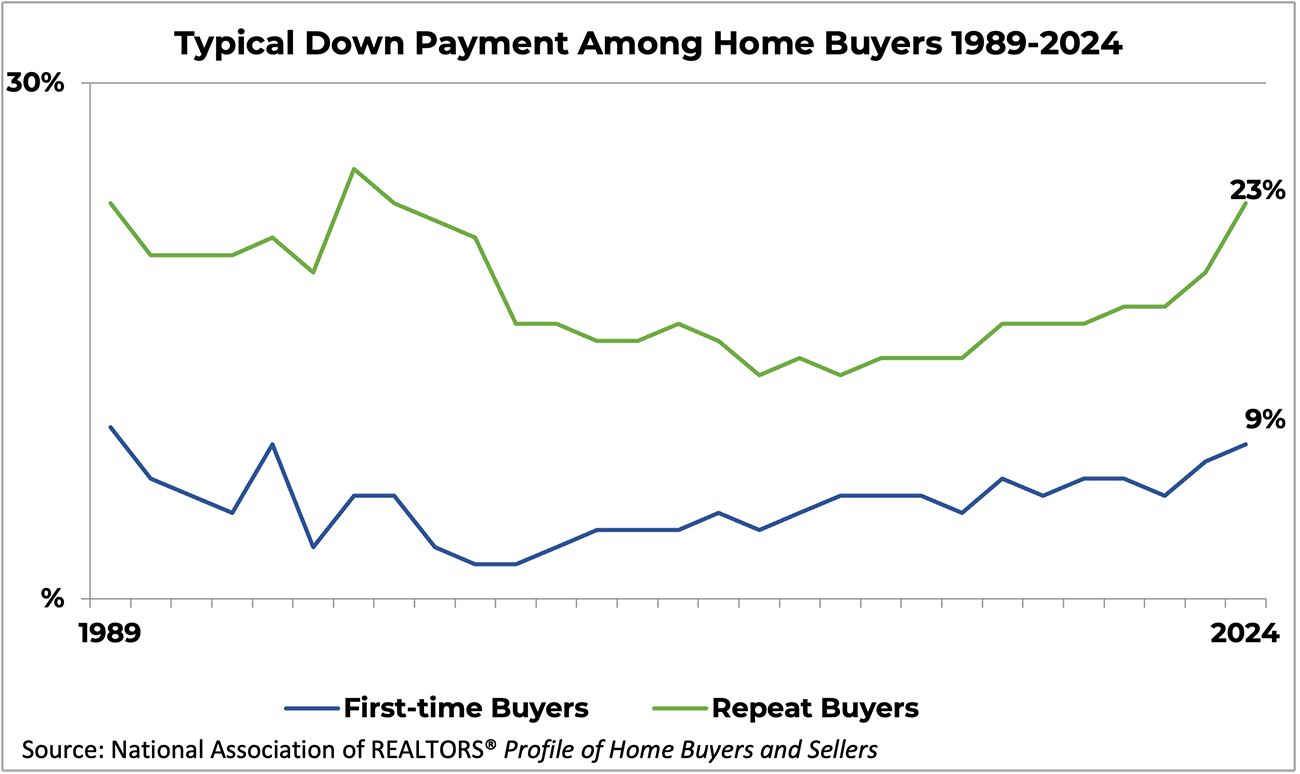
- First-time buyers typically put down between 6% and 9%, and that range has remained consistent since 2018.
- The highest average down payment for first-time buyers was just 10%, going all the way back to 1989 (when NAR first began tracking this data).
For repeat buyers, the story is a little different:
- The typical down payment last year was 23%, reflecting the equity they've built in their previous homes.
- Compare that to 2014, when repeat buyers put down just 13% on average. That’s a significant jump—one that mirrors the rise in home values and accumulated equity over time.
So, What Does This Mean for You?
If you’re a first-time buyer, don’t let the myth of the 20% down payment keep you on the sidelines. While saving for a down payment is still a commitment, the numbers show that you may need less than you think.
Of course, there are advantages to larger down payments—like lower monthly payments or avoiding private mortgage insurance (PMI)—but the bottom line is this:
You don’t have to wait forever to buy a home.
The best move? Talk to a trusted real estate professional who can guide you based on your financial picture, local market conditions, and available loan programs.
Final Thought:
Be informed. Be strategic. And don’t let myths stand in the way of your homeownership journey. With the right knowledge—and the right team—you’ll be better prepared to take that first step toward your dream home.